Blog
Modern cars depend on electrical systems for far more than simply starting the engine. Lighting, power windows, sensors, electronic control units, battery charging circuits, and advanced safety features all rely on a healthy electrical network to function correctly every single day. When any part of that network develops a fault, the symptoms can range from a weakening battery and intermittent starting problems to dashboard warning lights and malfunctioning electronic features that affect both comfort and safety. Understanding the most common causes of electrical failure helps vehicle owners identify problems early — and act before minor faults escalate into significantly more expensive repairs at a professional auto electrical repair Dubai center.
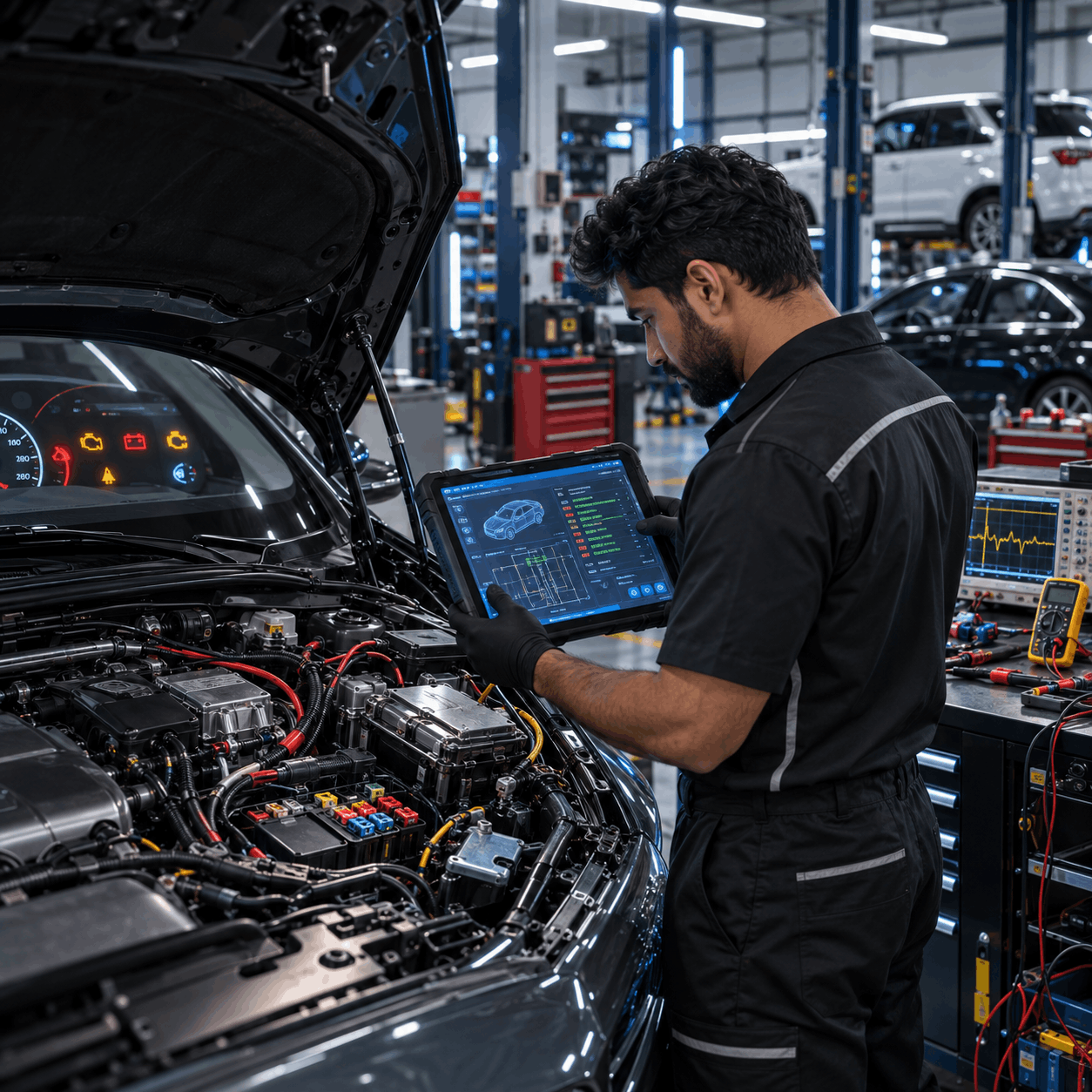
Choosing a qualified auto electrical repair Dubai specialist is the most effective response when your vehicle shows signs of electrical malfunction. An experienced technician inspects the battery, alternator, wiring harnesses, fuses, sensors, and electronic control modules systematically — tracing the fault to its precise origin rather than guessing. This diagnostic approach matters enormously. Replacing parts without first identifying the actual root cause leads to unnecessary expense, repeat visits, and faults that continue to surface despite the cost already spent. Professional diagnosis removes that uncertainty entirely — giving vehicle owners a clear, accurate picture of what needs to be fixed, why it needs fixing, and exactly what the repair will cost before any work begins.
Common Auto Electrical Problems in Modern Cars
Electrical issues can appear in several different ways — and some symptoms may initially seem unrelated to the vehicle’s electrical system at all, making them easy to dismiss or misattribute to something else entirely. Knowing the most common warning signs makes it considerably easier to describe the problem accurately to a technician at a professional auto electrical repair Dubai center, ensuring the diagnostic process starts in the right direction from the very first inspection rather than working through unnecessary possibilities that waste both time and money.
Battery and Charging Problems
A battery that repeatedly loses charge may indicate more than an old battery. Problems with the alternator, charging circuit, battery terminals, or electrical connections can prevent the battery from receiving sufficient power. Drivers may notice slow engine cranking, dim headlights, or difficulty starting the vehicle. Technicians can test the battery’s condition and inspect the charging system to determine whether the battery, alternator, or another electrical component requires attention.
Faulty Starter and Alternator
The starter motor uses electrical power to crank the engine when the vehicle is started. A failing starter can cause clicking sounds, slow cranking, or complete starting failure. Similarly, an alternator is responsible for generating electrical power while the engine runs and keeping the battery charged. A technician can check voltage output and electrical connections to determine whether these components are operating within the required range.
Faulty Fuses and Relays
Fuses and relays protect electrical circuits and help control the flow of power to different components. A blown fuse may cause lights, windows, infotainment systems, or other features to stop working. Relays can also become faulty and prevent specific electrical components from receiving power. Technicians can inspect the fuse box and test the relevant circuits to identify the problem. Replacing a fuse without finding the reason it failed may allow the same issue to happen again.
Malfunctioning Sensors
Modern vehicles use numerous sensors to monitor engine, transmission, temperature, safety, and other systems. A faulty sensor may send incorrect information to the vehicle’s control module. This can result in poor engine performance, unusual fuel consumption, warning lights, or starting difficulties. Diagnostic scanning can help identify fault codes associated with specific sensors. Technicians can then test the sensor, wiring, and connections before deciding whether replacement is required.
Lighting and Indicator Issues
Headlights, brake lights, indicators, and parking lights are essential for visibility and road safety. Electrical faults can cause lights to flicker, become dim, or stop working completely. Possible causes include damaged wiring, faulty bulbs, loose connections, blown fuses, or charging-system problems. LED lighting systems may also involve control modules that require specialised diagnostic testing. A proper inspection can identify the source of the fault and help restore reliable lighting performance.
ECU Diagnostics and Its Importance
The Electronic Control Unit, commonly called the ECU, is an important part of a modern vehicle’s electronic architecture. It receives information from various sensors and uses programmed instructions to control or coordinate functions such as engine operation, fuel delivery, emissions, and other systems depending on the vehicle. An ECU diagnostic Dubai garage can use suitable diagnostic equipment to communicate with the vehicle’s control modules. The scan may identify stored fault codes associated with sensors, circuits, communication systems, or other components. However, a fault code does not automatically mean that the related component needs replacement. It provides a starting point for further testing. For example, a sensor-related code could sometimes result from damaged wiring, a poor connection, or a power supply issue rather than a defective sensor. Technicians therefore need to combine diagnostic scan results with physical inspections and electrical testing.
Understanding Wiring Faults
Vehicle wiring connects the battery, sensors, control modules, lights, switches, and other electrical components. Over time, wiring can become damaged due to heat, vibration, moisture, corrosion, or regular wear. Even a small wiring problem can interrupt the operation of several connected systems. Common wiring faults include:
- Broken or Damaged Wires: Physical damage can interrupt the flow of electricity and cause certain components to stop working or operate intermittently.
- Loose Connections: Poorly secured connectors can create unstable electrical connections, resulting in flickering lights, intermittent faults, or system failures.
- Corroded Terminals: Moisture and exposure to the elements can cause corrosion around terminals and connectors, increasing electrical resistance and affecting component performance.
- Damaged Insulation: Cracked or worn insulation can expose wires and potentially cause short circuits when they come into contact with other wires or metal surfaces.
- Short Circuits: A short circuit can cause excessive current flow and may blow a fuse or affect multiple electrical components.
Technicians can use diagnostic equipment and electrical testing tools to check continuity, voltage, resistance, and connections. Identifying the exact location and cause of a wiring fault is important because replacing a functioning component will not resolve an underlying wiring problem.
What Do Car Warning Lights Mean?
Dashboard warning lights are designed to alert drivers when a vehicle system requires attention. Some lights indicate routine information, while others may signal a problem that needs prompt inspection. The check-engine light is commonly associated with engine management and emissions-related systems. Other warning indicators can relate to the battery, braking system, airbags, ABS, traction control, or other electronic functions.
A warning light should not automatically be ignored simply because the vehicle continues to drive normally. Some electrical faults can begin with an occasional warning and become more noticeable over time. Professional car warning light repair Dubai services can involve scanning the relevant control module, interpreting fault codes, checking associated components, and clearing the warning only after the underlying issue has been addressed.
Electrical Accessories That May Develop Faults
Electrical problems are not limited to the engine compartment. Various comfort and convenience features also depend on electrical circuits and control modules. Power windows may stop responding because of a faulty switch, motor, fuse, wiring connection, or control module. Central locking problems can similarly result from electrical connections, actuators, switches, or electronic control issues.
Headlights, indicators, interior lighting, parking sensors, reverse cameras, infotainment systems, and air-conditioning controls may also experience electrical faults. Because different systems can share circuits or communicate through vehicle networks, accurate diagnosis is important before replacing components.
Why Proper Diagnosis Matters?
Electrical problems can sometimes produce similar symptoms despite having completely different causes. A vehicle that fails to start, for example, could have a weak battery, faulty starter, damaged wiring, a charging problem, or an electronic control issue.
Professional auto electrical repair Dubai services generally begin with an inspection rather than immediate component replacement. Technicians may check the battery and charging system, scan electronic modules, inspect fuses and relays, test wiring, and examine relevant sensors and connectors. Likewise, an ECU diagnostic Dubai garage can help identify electronic fault codes and communication issues, but the results should be interpreted alongside other diagnostic tests. This approach can help reduce unnecessary part replacement and make repairs more targeted.
When Should You Get an Electrical Inspection?
Drivers should consider an electrical inspection when they notice repeated starting difficulties, flickering lights, unexplained battery drainage, malfunctioning electronic features, unusual dashboard messages, or warning indicators that remain illuminated. Prompt attention can be particularly useful when several electrical symptoms appear together. For example, dim headlights combined with starting difficulties may indicate a charging-system problem, while multiple dashboard warnings could point toward a communication, power supply, or control-module issue. A car warning light repair Dubai service can help determine whether a warning is related to a sensor, wiring problem, control module, or another vehicle system. Getting the cause identified early may help prevent a minor electrical fault from affecting other components.
Electrical systems have become increasingly important in modern vehicles, making accurate testing and diagnosis an essential part of vehicle maintenance. ECU-related faults, wiring problems, battery and charging issues, and dashboard warning lights can have different causes even when their symptoms appear similar. Rather than relying on guesswork or replacing parts unnecessarily, vehicle owners can benefit from professional inspection and systematic electrical testing. Identifying the underlying fault allows the appropriate component or circuit to be repaired and helps keep the vehicle’s electronic systems operating reliably.